The Mall Died for Our Sins and All We Got Was Discord: America's Long Search for Somewhere to Be
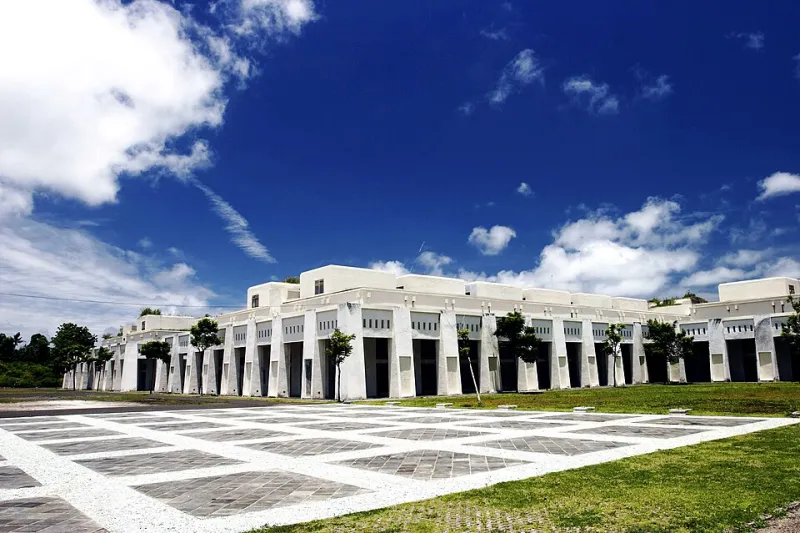
Photo: Krismartin at en.wikipedia, Public domain, via Wikimedia Commons
Let the record show that America used to be good at hanging out. We had whole buildings dedicated to it. Buildings with pretzels in them.
Ray Oldenburg, a sociologist with excellent timing and terrible marketing, coined the term "third place" in 1989: the spot that isn't home (first place) or work (second place), but the somewhere-else where community actually happens. The barbershop. The diner. The bowling league. For a few decades, America was the world capital of third places, and then, with the efficiency of a nation that cannot leave well enough alone, we dismantled all of them.
Here's the timeline of the collapse, annotated with grief.
A Brief History of Everything We Tore Down
1950s–60s: The Diner Era. The local diner was the original third place — bottomless coffee, a booth that knew your order, a waitress who'd seen your whole life fall apart and reassemble. Then the interstate highway system and fast food chains standardized eating into a transaction. You can still get a patty melt, but nobody at the drive-thru window knows your name, and frankly the headset makes it weird.
1970s–80s: The Arcade Golden Age. Dark rooms full of cigarette smoke and the sound of digital death. The arcade was where you learned about community, rivalry, and that a stranger named "ASS" could hold the top score forever. Home consoles killed it. We got the games and lost the room.
1980s–90s: The Mall Apex. The mall was the third place that wore a food court crown. Teenagers from twelve zip codes converged on one building to walk in circles, buy one pretzel, and exist near each other. It was glorious and it was doomed. E-commerce gutted the retail, and once the stores left, we learned the uncomfortable truth: the mall was never really about shopping. The pretzel was the excuse. The hanging out was the product.
2000s: The Coffee Shop Interregnum. Starbucks attempted to be everyone's third place — literally, their stated mission for a while was exactly that. But a third place you purchase hourly is a rental, not a home. Also everyone had laptops and headphones, so we all sat alone together, which is the American way.
2010s–now: The Discord Era. And here we are. The third place went digital, and honestly, some of it works! A good Discord server with actual regulars and in-jokes has genuine hangout energy. But let's be real about the failure modes: the server with 4,000 members and zero messages. The group chat pretending to be a community. The "hangout" that's really just a feed you lurk. A Discord server is a third place the way a hotel lobby is a living room.
The Great Rebuild (And Why It's Gen Z's Turn)
Here's where I'll say something optimistic, against my nature: people are rebuilding third places, and they're doing it on purpose.
Talk to the folks behind the wave of board game cafés opening in mid-sized American cities — places like the ones popping up in Columbus, Asheville, and Portland — and you'll hear the same thesis: people are starving for scheduled, in-person, phone-down socializing. You pay a small cover or buy a coffee, and the structure does the work. Nobody has to text first. You just show up and a stranger teaches you Catan and then you have a friend. It's the arcade model with better lighting.
The running club phenomenon is the same instinct wearing sneakers. Gen Z — the generation we all assumed would socialize exclusively through screen — turned run clubs into the new bars. Chapters of national groups like City Girls Who Walk or local run collectives routinely draw hundreds of people to a park at 8 a.m. on a Saturday. Eight. A.M. Voluntarily. If that's not a sign of a third-place famine, nothing is.
Even the mall is attempting a resurrection, rebranded as "experiential retail" — arcades inside breweries, mini golf and cocktails, food halls where the food is real. The lesson everyone's relearning: the stores were never the point. The being-there was the point.
My Actual Opinion, Since This Is an Opinion Section
A third place needs three things: a reason to be there that isn't a person, people who are regularly there, and the absence of an algorithm deciding who you see. Discord has the first two and keeps fumbling the third. The algorithmic feeds promised us connection and delivered content about connection, which is like ordering a pizza and receiving a documentary about wheat.
So here's my pitch: the third place isn't dead, it's just expensive to build again, in both money and effort — and effort is the currency we're all broke in. But the run clubs and board game cafés prove the demand is there. People will wake up at dawn and pay $12 for a latte just to stand near other humans. That's not a trend. That's a famine ending.
Go to the thing. Learn the game. Be a regular somewhere. The diner booth is gone, but the booth was never magic — the showing up was.