The Scandal Shrug: Why Celebrity Controversies Are Basically Decorative at This Point
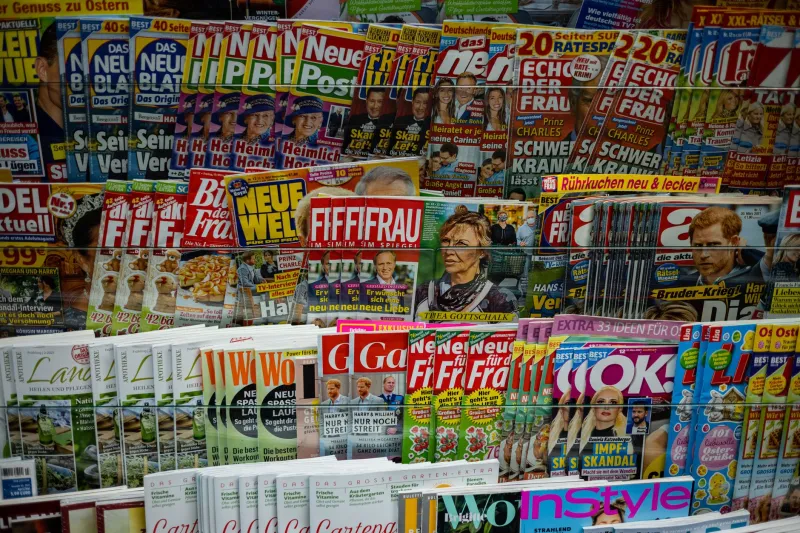
Remember when a celebrity scandal could actually end someone? Like, end them? We're talking career in a box, public apology tour, five years of lying low before a carefully orchestrated comeback that may or may not include a documentary. There was a whole arc. There were consequences. People lost endorsement deals and had to go be in a Lifetime movie for a while.
Now we watch a major celebrity controversy trend for forty-eight hours, read forty takes about it, watch the main character post a Notes app apology, and then — nothing. The discourse evaporates. The streaming numbers stay flat or go up. The brand deals survive. And we all collectively move on to the next thing because there is always, always a next thing.
The scandal machine is broken. Or maybe we broke it. Either way, here we are.
The PR Playbook Is Too Visible Now
Part of what's killed the dramatic power of celebrity scandals is that we've all read the manual. We know the steps. We've seen the cycle so many times that the predictability itself becomes a kind of inoculation against outrage.
Step one: controversy breaks. Step two: celebrity goes silent for a strategic amount of time (not too long, not too short). Step three: carefully worded statement drops, usually acknowledging the situation without technically admitting anything. Step four: a trusted journalist gets an exclusive sit-down. Step five: the celebrity appears on a podcast, laughs about it a little, shows some growth, mentions therapy. Step six: new project drops and everyone moves on.
The formula is so well-worn at this point that watching it play out feels less like witnessing accountability and more like watching a cooking show. You know exactly what's going in the pot. You know what it's going to taste like when it comes out. The only question is execution.
When audiences can see the machinery, the machinery stops working.
Attention Is Finite and We've Been Spending It Recklessly
Here's the real problem: we've been running our collective outrage at full capacity for so long that the reserves are basically gone. The emotional bandwidth required to genuinely care about a celebrity scandal — to follow the story, process the implications, form a considered opinion, and sustain that opinion long enough to actually affect someone's career — is not infinite. And we've been spending it at an absolutely unsustainable rate.
In 2024 alone, the number of celebrity controversies that trended, peaked, and dissolved without material consequence has been staggering. We're not going to list them because you already know them and also because listing them feels exhausting. That exhaustion is the point.
When everything is a scandal, nothing is a scandal. The signal-to-noise ratio on celebrity accountability is now so degraded that even genuinely serious situations struggle to break through. They get flattened by the sheer volume of surrounding noise into just another item in the feed.
Cancellation That Sticks vs. Cancellation That Doesn't
Not all cancellations are created equal, and it's worth asking what actually separates the ones that land from the ones that get dunked into the void.
The controversies that have produced lasting career damage tend to share a few features: they involve documented, specific harm to real people; they reach audiences who weren't already fans; and they arrive at a moment when the cultural appetite for that particular celebrity was already waning. Basically, cancellation works best when it's a nudge to a career that was already tipping.
For celebrities at the peak of their cultural relevance — or celebrities with a sufficiently devoted fanbase — the math is completely different. The fanbase acts as a kind of scandal buffer, absorbing and neutralizing the controversy before it can reach critical mass. Every negative take gets ratio'd by defenders. Every think piece gets met with counter-think pieces. The discourse becomes so loud and chaotic that no coherent narrative ever fully forms, and without a coherent narrative, accountability can't stick.
The Redemption Arc Industrial Complex
We also need to talk about the redemption arc, which has become so culturally normalized that it's essentially pre-loaded into every scandal. We no longer ask if a celebrity will be redeemed — we ask when and how.
This isn't entirely cynical. People do change. Growth is real. But the redemption arc has been so thoroughly commodified — turned into a PR product, a documentary series, a podcast appearance, a carefully timed album rollout — that it's become nearly indistinguishable from a marketing strategy. And because we've seen so many of them, we've developed a kind of ambient skepticism toward the whole genre that makes even genuine accountability look like a performance.
The result is a strange cultural equilibrium where nothing is fully forgiven and nothing is fully condemned. Everyone exists in a permanent state of mild controversy, and the mild controversy becomes part of their brand. Some celebrities have figured out that leaning into this is actually more effective than fighting it.
Does Any of This Actually Matter
Here's the question that nobody really wants to answer: if celebrity accountability has become largely theatrical, what are we actually doing when we participate in the discourse? Are we enacting some kind of social justice function, or are we just feeding the engagement machine that benefits the platforms and, indirectly, the very celebrities we're supposedly holding accountable?
The uncomfortable answer is probably: both, depending on the situation, and it's genuinely hard to tell which is which in real time.
What's clear is that the current system is not working as advertised. The promise of cancel culture — that public accountability would serve as a check on celebrity behavior — has largely not been delivered. What we got instead was a content format. A recurring drama series with a familiar structure and a cast that rotates but never really leaves.
Maybe the most honest thing we can do is acknowledge that we're watching a show, decide which shows are worth our attention, and save our actual outrage for the moments it might do something.
Or we could just log off and touch some grass. The scandals will still be here when we get back. They always are.