Congratulations, You're Unique — Just Like Everyone Else in Your FYP
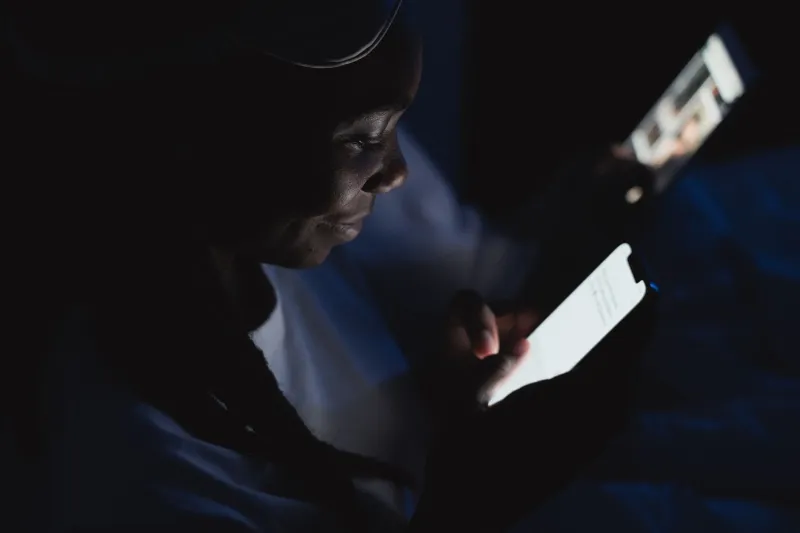
Somewhere between your third thrifted cardigan purchase and your fourteenth video about being a 'main character who also romanticizes doing laundry,' something happened. You stopped choosing who you were and started receiving it — delivered fresh to your For You Page, pre-wrapped in the exact aesthetic that would make you feel seen, understood, and deeply, cosmically individual.
Welcome to the age of algorithmic identity. Population: everyone, but make it personal.
Your Personality Was Served to You at 2 AM
Here's a thing that's true and kind of uncomfortable: TikTok's recommendation algorithm is genuinely extraordinary. It is, by most accounts, the most sophisticated content-matching system ever pointed at human eyeballs. It learns your micro-preferences faster than your therapist, your best friend, or frankly your own journaling practice. Within a few hours of use, it has mapped the contours of your taste with unsettling accuracy.
And then it builds you a mirror.
The problem with mirrors — real ones, algorithmic ones, all of them — is that eventually you forget you're looking at a reflection. You start thinking the image is you. So when TikTok serves you a steady diet of 'soft life aesthetic,' 'goblincore foraging content,' or 'neurodivergent girlies who cry at commercials and also love spreadsheets,' it isn't discovering who you are. It's constructing a version of you that performs well within a specific content ecosystem. There's a difference. A significant one.
But try telling that to someone who just found their 'niche.'
The Niche Industrial Complex
At some point — historians will debate when, exactly — TikTok's cultural language shifted from 'interests' to 'niches.' This wasn't accidental. The platform's entire architecture rewards specificity. The more granular your content category, the more efficiently the algorithm can route you to an audience that will engage. Broad content performs worse than targeted content. Vague vibes lose to hyper-specific ones.
So creators got specific. Wildly, magnificently, absurdly specific.
And then their audiences — meaning you, meaning us, meaning basically everyone with a smartphone and a mild sense of existential drift — started identifying with those specifics. Not just 'I like this video' but 'this video is me.'
This is how you end up with people describing their entire personality as 'chaotic feral academic who is also somehow very into slow mornings and oat milk rituals.' Which, okay, fair, relatable — but also that description fits roughly one in four people between the ages of nineteen and twenty-nine who have spent more than forty minutes on TikTok this month. The niche isn't a niche anymore. It's a demographic.
The Paradox of Personalized Everything
Here's the genuinely interesting part, the part that keeps internet culture writers employed and philosophy professors quietly smug: algorithmic personalization was supposed to make us more individual. The pitch was always that instead of consuming the same three TV channels as everyone else, you'd get a perfectly curated experience tailored specifically to your unique sensibilities.
And in a narrow sense, it worked! Your FYP looks different from your mom's FYP, which looks different from your coworker's FYP. The surface-level content is genuinely varied.
But underneath the surface, the structure of how people relate to that content has become weirdly uniform. Everyone has 'found their people.' Everyone has 'a niche.' Everyone is performing a carefully assembled identity that happens to map perfectly onto an existing content category. The aesthetics differ. The underlying behavior — identity-as-content, self-as-brand, personality-as-searchable-keyword — is identical across millions of users.
It's like if every person in America had a completely unique flavor of ice cream but they were all eating it the same way, with the same spoon, making the same face, posting the same photo. The flavor is yours. The ritual belongs to the algorithm.
The Engagement Trap Nobody Warned You About
There's a specific feedback loop that deserves more attention than it gets. When you post content that aligns with your 'niche identity' and it performs well — comments, shares, the little dopamine drip of people saying 'this is SO me' — your brain files that away. The identity got rewarded. So you perform it again, slightly amplified. The algorithm routes that amplified version to more people who engage with it. Which rewards you further. Which amplifies the performance further.
After a few months of this cycle, you're not expressing an identity. You're iterating on a content strategy. The you that exists on TikTok has been A/B tested into its current form by millions of tiny engagement signals. That's not self-expression. That's product development.
Again: not entirely a bad thing! People have genuinely found community through this process. People have discovered actual interests they didn't know they had. The algorithm isn't evil. It's just indifferent — optimizing for engagement the way a river optimizes for gravity, without any particular concern for what gets swept along.
So What Are You Actually Like?
This is the question that tends to make people uncomfortable when they sit with it for more than thirty seconds. If you stripped away the FYP, the aesthetic labels, the micro-community you found at 1 AM during a particularly chaotic scroll session — what's left? What do you like when no one's watching and nothing's being recommended?
The honest answer for most people is: messier, weirder, and considerably less coherent than their TikTok presence suggests. Real human taste is contradictory and embarrassing and doesn't resolve into a clean niche. You probably like some things that don't 'go together.' Your interests almost certainly don't have a unified aesthetic. You contain multitudes that would perform terribly as content.
And that, weirdly, is the most individual thing about you.
The Vibe Check You Didn't Ask For
None of this is a call to delete TikTok or reject digital community or go live in a cabin journaling by candlelight (although, to be fair, that content would probably do numbers in the right niche). It's more of a gentle suggestion to occasionally interrogate the identity you've been handed versus the one you'd construct if the algorithm wasn't watching.
You are not your FYP. You are not your niche. You are not the sum of your most-engaged-with content categories.
You're a whole complicated person who sometimes watches cottagecore videos and sometimes watches true crime and sometimes just stares at a wall for eleven minutes because being alive is a lot.
The algorithm doesn't have a category for that. Which is probably exactly why it's the most human thing about you.
Now go touch some grass. We mean that affectionately. It would probably go viral.