Your Favorite YouTuber Is Not Your Friend (But Your Brain Didn't Get the Memo)
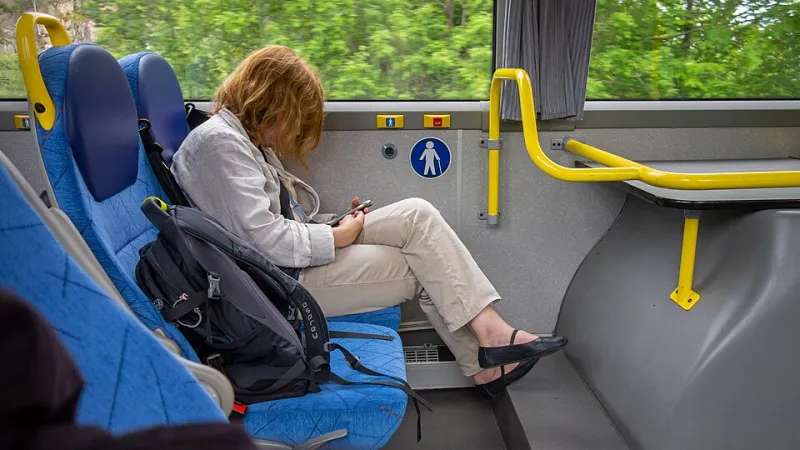
Photo: W.carter, CC BY-SA 4.0, via Wikimedia Commons
Let's set the scene. It's 11:30pm on a Tuesday. You're horizontal on the couch, half a bag of Takis deep, watching a 26-year-old woman in Portland film herself making matcha and talking about her situationship. You feel... cozy. Seen, even. Like you're hanging out.
You are not hanging out. She does not know you exist. And yet, somehow, your nervous system has fully decided this counts as human connection.
Welcome to parasocial relationships 2.0 — now with better lighting, algorithmic targeting, and a monetization strategy built entirely around your emotional availability.
Your Brain Is Running Very Old Software
Here's the thing that makes this whole situation kind of hilarious and kind of horrifying: the part of your brain processing your relationship with your favorite creator is the same part that processes your actual friendships. Like, neurologically, it cannot tell the difference.
When you watch someone consistently — their face, their voice, their opinions on which Stanley cup colorway is worth it — your brain starts building what researchers call a "parasocial bond." It's a one-sided relationship that your very ancient, pre-internet brain registers as real social contact. The same mirror neurons that fire when your actual friend laughs at your joke fire when MrBeast reacts to something surprising. Your hypothalamus does not care that you've never been in the same zip code.
This isn't a new phenomenon. People had parasocial relationships with radio hosts in the 1940s. Soap opera characters got real wedding gifts mailed to the studio. But the current version of this is operating at a scale and precision that would make those old-school broadcasters' heads spin off their bodies.
The Algorithm Is Basically a Matchmaker With Bad Intentions
What's different now isn't human psychology — that part hasn't changed. What's different is that the platforms have figured out exactly how to exploit it, and they are very, very good at their jobs.
YouTube, TikTok, and Spotify don't just recommend content you'll enjoy. They're engineering familiarity. The more you watch someone, the more the algorithm serves you that person. The more you see them, the more your brain registers them as a known, trusted presence. The more trusted they feel, the more you watch. It is a loop specifically designed to make you feel like you've chosen a friend when you've actually been assigned one.
TikTok's For You Page is particularly surgical about this. The platform's recommendation engine doesn't just track what you watch — it tracks how long you pause, whether you rewatch a clip, even where you stop scrolling. It builds a psychological profile so detailed it can predict which version of a creator's personality you'll bond with most. Funny? Vulnerable? Aspirational? The app will serve you the flavor of parasocial attachment you're most susceptible to. It's less "content discovery" and more "emotional targeting."
And streaming platforms are catching up fast. The reason Netflix keeps auto-playing the next episode of a docuseries about a real person isn't just engagement — it's because binge-watching someone's actual life story is one of the fastest ways to generate a parasocial bond with a stranger. You know their childhood trauma before you know their last name.
Why We're More Vulnerable Now Than We've Ever Been
Here's where it gets a little less funny and a little more "okay but are we okay."
Americans are, by most available metrics, extremely lonely. The U.S. Surgeon General literally issued an advisory on it in 2023, calling loneliness an epidemic. Rates of close friendship have declined significantly over the past few decades. People are spending more time alone, more time online, and less time in the kind of repeated, low-stakes face-to-face contact that actually builds real community.
Into that void walks the morning routine vlog. The podcast host who sounds like your cool older cousin. The Twitch streamer who plays games for eight hours and chats with chat like they're all in the same living room.
These creators aren't doing anything malicious, for the most part. Many of them genuinely care about their audiences. But the platforms are deliberately filling a social gap with a product, and that product happens to generate ad revenue. Your loneliness is, quite literally, someone else's business model.
The intimacy is also being engineered more explicitly than ever. "Get ready with me" videos, "day in my life" vlogs, real-time Discord servers, Patreon tiers where you can theoretically DM someone — all of these formats are designed to collapse the psychological distance between creator and audience. The closer it feels, the more you invest. The more you invest, the more you spend, subscribe, and stay.
The Breakup Nobody Warned You About
So what happens when the algorithm decides you've moved on — or moves you on without asking?
This is the part that doesn't get talked about enough. Parasocial relationships can end, and when they do, the grief is real even if the relationship technically wasn't. A creator goes on hiatus. They change their content. They do something that makes you feel like you never knew them at all. Or the platform just stops recommending them to you, and the "friendship" quietly evaporates because the algorithm found someone new for you to watch.
People describe this as genuinely disorienting. You miss someone who doesn't know you're gone. You feel betrayed by someone who never made you any promises. It's a strange emotional hangover with no socially acceptable name.
Some researchers are starting to call this "parasocial breakup" and studying it like any other relationship dissolution — because the emotional response is, neurologically, pretty similar.
So What Do We Do With This Information
Look, nobody here is going to tell you to delete TikTok and go touch grass. That's not the vibe and also you've heard it. But there's something worth sitting with in all of this.
The connections we're forming with creators aren't fake, exactly — the feelings are real. But they're also being manufactured by systems that profit from keeping us in a loop of comfortable, low-effort pseudo-intimacy. Every hour you spend feeling like you're hanging out with someone online is an hour the platform counts as a win, regardless of whether you actually feel less alone afterward.
The matcha woman in Portland is probably lovely. Your brain's read on her is probably pretty accurate, even. But she is also, in a very real sense, a product being served to you by a machine that has studied your loneliness with more attention than most people in your life ever have.
Which is either a reason to log off, or the most aggressively modern form of being known that has ever existed.
Your call. The algorithm will be watching either way.